Genomics4Newborns
Exploring the legal, ethical, equity and economic implications of genomics in newborn screening
Newborn bloodspot screening (NBS) programs are one the most effective and trusted population screening services in Australia. Almost all Australian babies – about 99% – are tested in the programs. Australia is now considering using genomic tests in the NBS programs to improve health outcomes for babies and their families.
The gEnomics4newborns: Research to integrate ethics and equity with effectiveness and economics for genomics in newborn screening project aims to develop new health technology assessment tools for easier evaluation of using genomics in the NBS programs. New health technology assessment tools will ensure the NBS programs remain equitable, effective, cost-effective and ethically-informed. The gEnomics4newborns research project is funded by the Medical Research Future Fund grant awarded in 2022.
A national Australian citizens' jury on using genomics in newborn bloodspot screening
Integrating genomics into NBS programs would represent a major technological advancement. As with any change in healthcare, it's crucial to assess the ethical, legal, and social implications of using genomics in these programs. This assessment must take into account the perspectives of all stakeholders, including the Australian public.
To gather these perspectives, the national Australian citizens’ jury on the use of genomics in newborn bloodspot screening invited Australians to share their views on incorporating genomics into NBS programs. In preparation, an Expert Reference Group was set up, and Lauren Hunt HGSA Chief Operations Officer was part of this group, along with several other HGSA members.
The citizens' jury took place from 9 March 2025 to 30 March 2025, and involved a mix of online and in-person sessions. Jurors learnt about the topic and engaged in discussions online, before meeting. A 3-day in-person session was then held in Canberra to produce recommendations.
Jurors were selected through a democratic lottery process, managed by the Sortition Foundation, an independent specialist agency. Over 6,300 invitation packs were distributed across Australia, covering all states and territories. From those who respond, an algorithmic system selected 30 participants to ensure the jury reflects Australia's diverse population. Selection criteria included age, gender, ancestry, education level, state or territory of residence, urban or non-urban location, parental status, and experience of living with a disability.
The Question for the jury to answer
Since their inception, newborn bloodspot screening programs have relied on tests that measure the levels of specific natural chemicals in a baby’s blood. Recently, some states and territories have introduced genetic tests into their newborn bloodspot screening programs to detect a few additional health conditions. Now there are proposals to further integrate genomics into these programs.
The central question for the national Australian citizens’ jury on using genomics in newborn bloodspot screening was:
Under what circumstances, if any, should Australia use genomics in the newborn bloodspot screening program to ensure the program remains trustworthy and effective?
The jury was asked to consider three sub-questions:
- What types of genetic or genomic testing should be done in newborn bloodspot screening?
- How much of the genetic information from testing should be extracted, and how much should be reported?
- How much of the genetic information should be stored?
Information given to jurors
A key element of citizens’ juries is ensuring that jurors have the opportunity to learn about the topic before engaging in discussions and drafting recommendations. This support allows jurors to make well-informed recommendations on the given question.
To see the information bundle provided to jurors and the expert witnesses for the jury visit: Genomics4Newborns - University of Wollongong – UOW
As you will see HGSA members are well represented in the expert witnesses.
The HGSA thanks these members for their significant contribution to the project.
Impact of the Jury
The HGSA Newborn Screening Committee considered and responded to the juries recommendations. The responses can be downloaded here or viewed below.
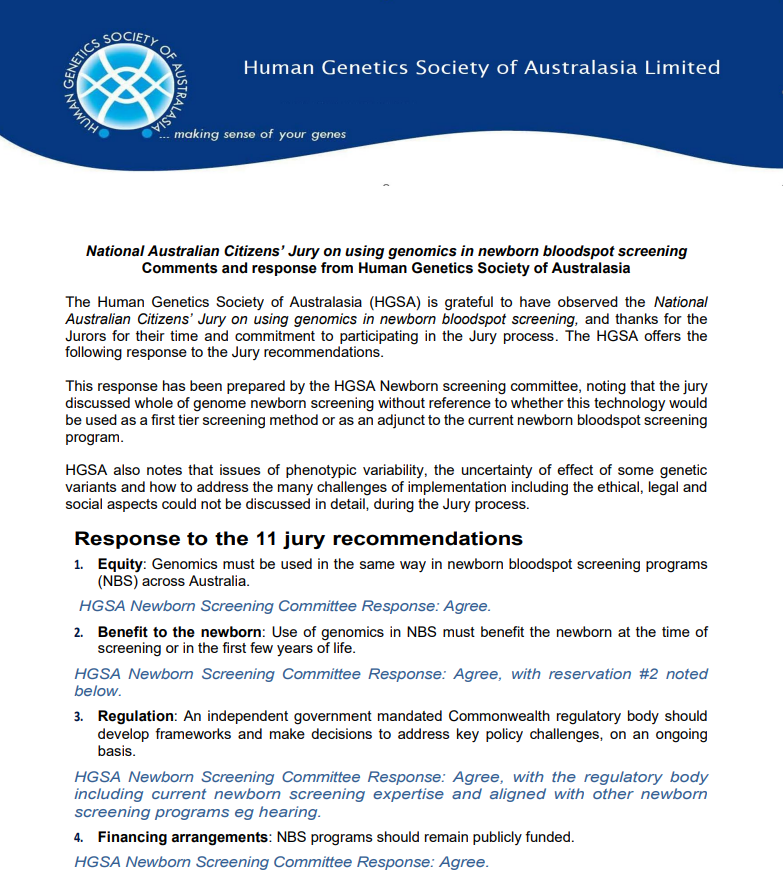
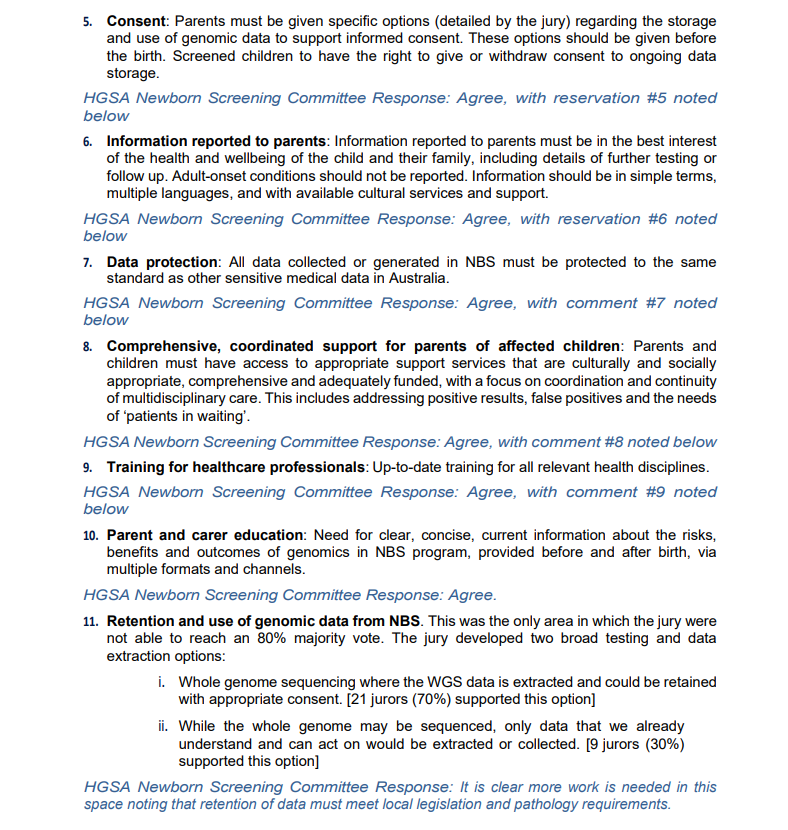
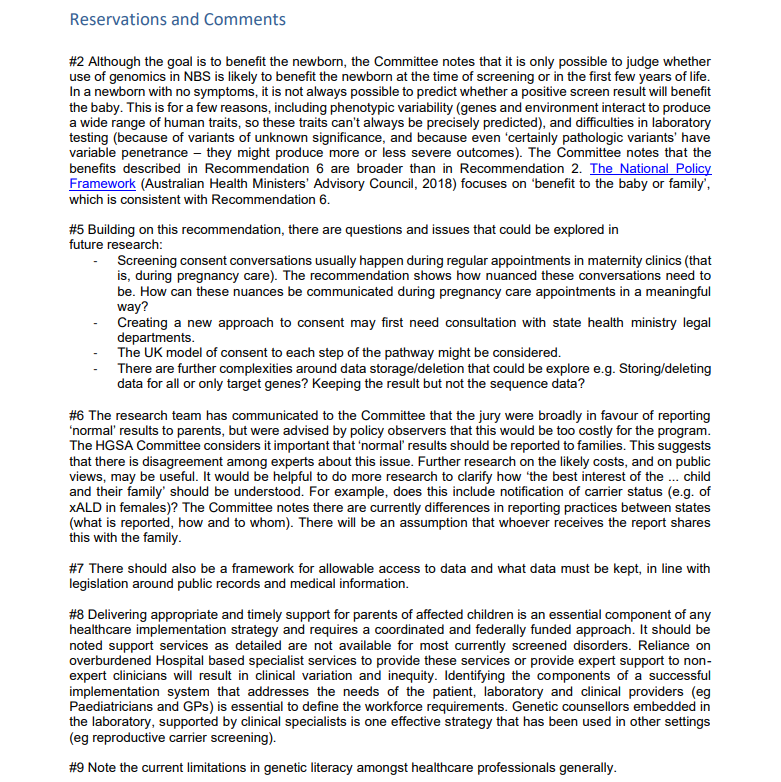
The study has now been published in the Medical Journal of Australia. Read the publication here: Genomic Newborn Screening: Verdict From an Australian Citizens’ Jury - Aquino - 2026 - Medical Journal of Australia - Wiley Online Library
The content of this page has been adopted from Genomics4Newborns - University of Wollongong – UOW with thanks.